Power chords: punk’s gender divide

It would be easy to imagine the autobiographies of Patti Smith and Tracey Thorn exploring common themes. The authors are among the relatively few women associated with punk, both apply a poetic sensibility to song writing and both have enjoyed long careers skirting the edges of mainstream success.
Despite this, their differences are stark. Smith, born in 1946, left suburban New Jersey to make art in New York. Quite what sort of art, she had not quite decided, but she slept in parks, stole food and eventually earned a pittance in bookshops while she struggled to find a medium and develop her craft. Thorn, a child of 1962, had a record contract before she had left school, met Ben Watt, the love of her life and creative collaborator on her first day at the University of Hull and was able to summon the music press to the flat they shared throughout her undergraduate days.
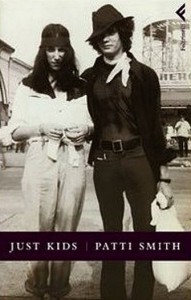 Smith does not mention punk once in this memoir. It is hardly surprising, because, although she was integral to the development of the New York punk, the scene of which she was part, along with the rest of the CBGB’s cast, had no real name for their nascent movement. For Thorn, ‘punk’ looms large over her life, although her Hertfordshire home was a good 20 miles from its London epicentre. To this day, she measures her actions against a set of ‘punk ideals’ – dismissing some, staying true to others, but with that hazy code for living as her touchstone, nonetheless.
Smith’s arrival in New York in 1967 opens a period of writing and painting during which her determination to make art never wavered. The idea that she might front a rock and roll band, however, took more than five years to crystallise. In common with Thorn, within a day or two in the city she had bumped into the man who would become her lover, soul mate and muse, Robert Maplethorpe. The trajectory of their relationship is as touching as it was remarkable. He too had an unfocused impulse to be an artist and they moved together from squalid room to dingy apartment trying to find space to harness their creative instincts.
Living in the Chelsea Hotel, Smith brushed by Janis Joplin, Grace Slick, Jimi Hendrix and an even more considerable cast of poets. A lesser rosta of New York celebrities, some drawn from the Factory crowd, like Candy Darling, Wayne County and Tinkerbele, were more intimate acquaintances. She even caused something of a sensation by performing her poetry accompanied by a guitarist at least two years before she actually got a band together. Despite making considerable waves, Smith was sufficiently uncomfortable with the attention that she did nothing to capitalise on the moment.
Perhaps what the two singers have in common is that they pursued a course dictated by their own sense of what they wanted to achieve, and devoted almost no attention to ‘making it’. Quite what propelled them both to success is hard to say, but Thorn comes closest to an answer.
“I know that to have a sound, a distinctive sound, which is yours, not borrowed and not easily copied is the most fundamental building block to any life in music. And so above all, I am grateful to be able to open my mouth and make a noise that is my own. There are many singers who are better than me, but they are not unique. And in this game, uniqueness is everything.”
The sometime Marine Girl paints herself in willfully humdrum shades – an uneventful, lower middle-class childhood, falling into making music and recording hit albums in sheds while she thought she was creating lo-fi demos.
Low-key though her start in life might have been, she captures an authentic whiff of every-town Britain at the end of the 1970s. More than anything, Thorn provides a sense of why punk sent such an electric charge through the 1960s cohort, as they tried to make sense of stagflation, the National Front and the winter of discontent. Smith’s mise en scene is significantly more exotic, but Thorn’s adolescent journey has more emotional resonance, at least for those of us with similar backgrounds.
Thorn also extracts one or two lessons from her career that others would do well to follow. In 1982, for example, Everything But The Girl made their first appearance in London, at the ICA, and Paul Weller joined them for a couple of songs. Surveying Thorn and Watt in their charity-shop threads, the former Jam frontman wondered if they shouldn’t make a bit more effort before taking to the stage?
Punk is not the only code against which Thorn considers her actions, her feminism too, often gives her cause to wonder whether she is taking the right course. She also struggles, at least a little, being a lone woman in a generally male industry. Smith, by contrast, gives voice to no such problems – although it is hard to believe that she was without issues.
It would be good to think that punk ushered in an era when female rock musicians were treated as equals and succeeded on their merits. The relatively paucity of women who have followed in Thorn’s or Smith’s footsteps suggests that this is wistful thinking. That punk provided the space to two such distinctive female voices to enjoy rather more than five minutes of success, however, is cause for at least some cheer.